When things go wrong – and they will – do your teams know how to respond? If not, team members can grow frustrated, issues will go unreported or not properly diagnosed, and quality will suffer. Develop problem solving skills by defining the expected behavior.
Define the Triggers
Understanding what constitutes an issue is the first step. These are easily understood when defined by a trigger – e.g. X minutes of equipment downtime. It's useful to involve the Team in defining these triggers, so they feel ownership of any issue they encounter.
The triggers should be specific with an agreed criteria for escalations. These could be agreed separately for different categories: Safety, Environment, Quality, Productivity, Cost or People issues.
Make It Easy
There needs to be zero barriers to raising the incident. Whether it's instant and on the spot, recorded and addressed later on, or in a regular Team meeting. The list of possible barriers is long:
- Self-doubt
- Disengagement
- Lack of clarity on expectations
- Not wanting to show up a problem caused by others
- Lack of basic understanding on the issue
- Perceived (or real) lack of support if the incident is raised
If the incident is not raised there can only be 2 explanations – there are no problems, or there are too many barriers stopping people. Develop a psychologically safe culture and enable the Team.
Act Quickly Using Problem Solving Skills
Let's assume the Team's goals are clear and their expectations of each other are defined. Now the Team leader's role is all about support – with speed. It's not about taking the issue from the Team member. Support means developing the team member so that they can resolve it.
The first level of support can be an extra set of hands. Next, it's about working with the Team member to determine root causes or refine an improvement idea. Take this coaching opportunity to improve the Team member's knowledge or skill.
Give Recognition
When sincere efforts are made, there should be open recognition. The person that raised the issue should be personally thanked. What you openly reward and recognize is as good as a broadcast message defining your Team's cultural norms.
Part of a Continuous Improvement Framework
Like the standardised problem solving skills discussed above, tools like Standard Operating Procedures (SOPs), and a Tiered Daily Management process supporting the entire PDCA loop will align people with their organisational and department goals every day.
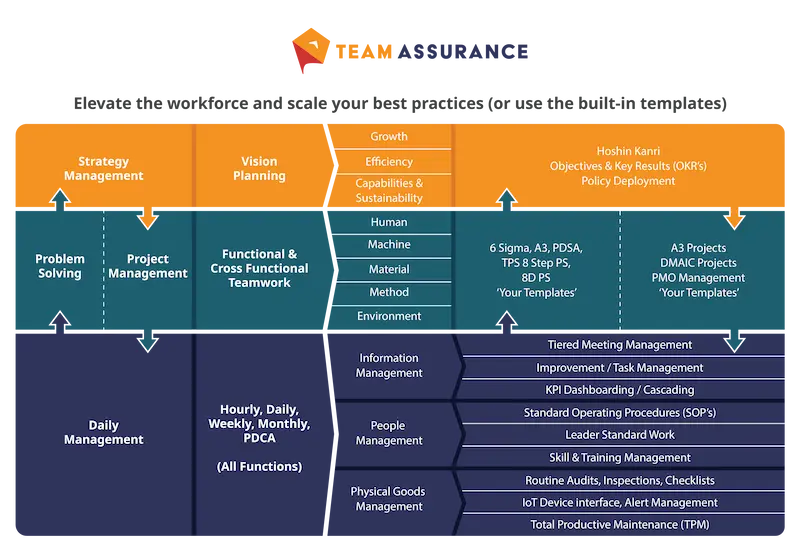
If you're a business in need (or a consultant with clients in need) and you'd like to discuss the opportunities that digital-aids to Lean tools provide contact us for a demonstration of the TeamAssurance platform.